ESG Report
OUR WINDOW
OF OPPORTUNITY
FRAMES A HORIZON
BUILT TO ENDURE
ESG Report
OUR WINDOW OF OPPORTUNITY FRAMES A HORIZON BUILT TO ENDURE
Lavastone Properties develops and manages properties that are designed to last, function efficiently, and create value for both tenants and communities. From asset acquisition and building new spaces, to fit-outs and planned maintenance, our activities touch every stage of a property’s life.
Our ESG strategy embeds environmental, social and governance considerations into every aspect of our development and leasing activities. Rather than approaching sustainability as a compliance requirement, we see it as an opportunity to pursue meaningful growth and drive long-term value. Grounded in global and local
standards, and aligned with our vision and risk appetite, it guides us to grow responsibly, while supporting our people, communities, and the environment. A clear governance framework, with Board oversight, dedicated committees and structured reporting, ensures that ESG priorities are embedded across the organisation and accountability is upheld at every level.
Shaped by the voices of our stakeholders, our material priorities focus on where we can create the most meaningful and lasting impact. This work supports our ambition to build a portfolio of energy-efficient, sustainable properties that benefit all our stakeholders.

Our goal: To build a portfolio of energy-efficient, sustainable properties that benefits our tenants, communities and the environment.
Frameworks and standards that guide us

ACT ADEME

SUSTAINABILITY ACCOUNTING STANDARDS BOARD

GREENHOUSE GAS PROTOCOL

NATIONAL COMMITTEE ON CORPORATE GOVERNANCE

SUSTAINABILITY DEVELOPMENT GOALS

GLOBAL REPORTING INITIATIVE

NET ZERO INITIATIVE (NZI)

BILAN CARBONE

SBTI
Environmental Performance
Material topics and strategic pillars
- Climate action
- Water, waste and energy management
- Sustainable procurement


Advancing climate action
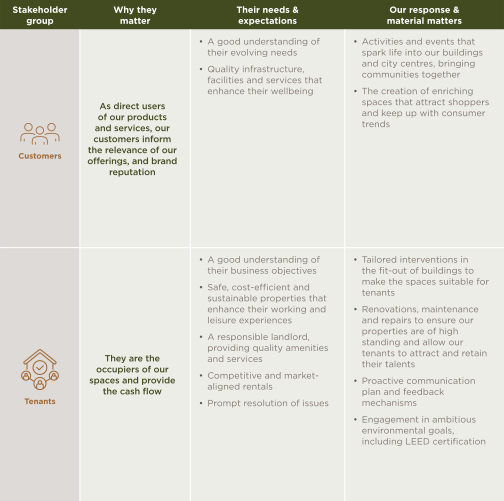
Climate action is central to our strategy. How we design, build, and operate our buildings determines energy use, carbon emissions, and long-term sustainability. This year, we progressed on our decarbonisation journey by continuing assessments with WillChange using both the Bilan Carbone® methodology and the GHG Protocol, enabling us to better understand our emissions profile and guide targeted interventions.
Last year’s findings revealed that 80% of our emissions come from tenant activity, which falls under Scope 3. This includes energy use, transportation, waste generation, and building operations. Integrating these upstream and downstream emissions into our carbon footprint calculation is complex, but essential to understanding our true impact and identifying opportunities for reduction along our value chain.
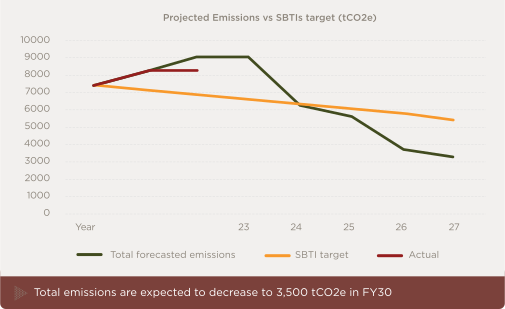
Last year’s carbon assessment, combined with detailed tenant data, informed a roadmap projecting emissions through 2029. This roadmap provides a clear framework to monitor progress, set targets, and guide strategic interventions.
Data-driven climate action
Our actions this year focused on three key areas to advance our climate strategy across both existing and future properties:
- Carbon footprint data and reporting
We are continuously improving our data collection processes to capture higher-quality, more accurate information on tenants’ fossil fuel consumption.
- Renewable energy production
Despite experiencing some delays during the permitting process, we successfully secured a Letter of Intent for one of the two PV farms at Case Noyale. At the time of writing the report, the second LOI had been received.
This marks an important step in our ambition not only to reduce our own emissions, but also to generate clean energy and contribute meaningfully to broader carbon-reduction efforts.
- Carbon offsetting and reduction
We embed carbon reduction criteria in our investment decisions, pursue LEED (O+M) certification for key assets, and align other properties with LEED standards. We have completed the LEED gap analysis for ABSA House and, in close collaboration with the anchor tenant, have undertaken retrofitting works at Les Cascades Building to bring it to LEED standards for Certification during FY26. We are currently progressing with the certification process for Les Cascades Building and CIM House.
Total Emissions
We use both the Bilan Carbone and GHG Protocol to assess the source of our emissions. While they both serve similar purposes, the GHG Protocol is globally recognised and more broadly used, making it our chosen basis for reporting. The variance between both figures obtained for FY25 is immaterial.
Bilan Carbone: 8249 tCO2e
GHG protocol: 8279 tCO2e

What caused the change in FY25 emissions
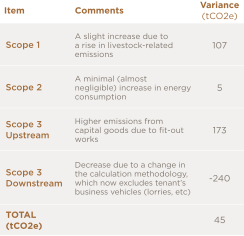
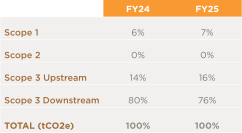

The “marginal” increase in emissions during FY25 is attributable to higher electricity consumptions linked to higher occupancies and, to some extent, increasing seasonal temperatures, alongside improved data collection. Despite this, Lavastone Properties remains on track to meet the long-term emissions reduction targets set out in its FY30 plan.
Environmental Performance
Water, waste and energy management

Water

We report here a 7% increase in water consumption which is reflected in the billing received from the CWA for sites where Lavastone Properties is responsible for payment. However, improved data collection and tracking has enabled us to determine the existence of a faulty water meter which has been addressed with the CWA. The estimated actual consumption should show a reduction of 3% from last year equivalent to approximately 495m3.

Waste
A total of 14,136 kg of waste was collected and recycled, including 8,721 kg of organic waste and 5,416 kg of non-organic waste.
Non-organic waste consisted of:
We partner with accredited third-party providers to ensure the proper treatment, traceability and diversion of waste from landfill. Organic food and garden waste are processed by BiobiN (Mauritius) Ltd using the patented BiobiN® system and converted into nutrient-rich compost for on-site landscaping. Recyclable waste streams are sorted, weighed and sent for recycling by Green Ltd. Waste is collected via Molok semi-underground containers at Orchids Car Park and the sorting and recycling activities at EDITH.

Energy

We generated 43MWh renewable energy through our PV installation, although production was impacted by a technical fault causing three months of downtime. We also recorded a modest increase of 1% in electricity consumption across our portfolio.

Sustainable procurement
3 printers, 2 laptops, 2 monitors, 3 keyboards and 3 mice were recycled.
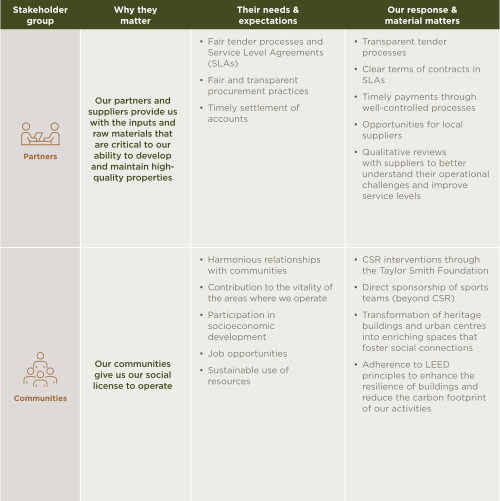
Social Performance
Material topics and strategic pillars
- Employee engagement and wellbeing
- Talent management and development
- Stakeholder and community engagement


Social Performance
Employee engagement and wellbeing
Key demographics
49 employees
40%

60%

36%
Gen Z
(13-28yrs)
48%
Millenials
(28-43yrs)
16%
Gen X
(44-59yrs)
Key demographics
Talent management and development
and 395 hours invested in training and upskilling
managers trained over 18 hours
New PMS platform
tested, implemented and supported by a new competency framework
Stakeholder and community engagement

OUR GOVERNANCE PERFORMANCE
Compliance statement
Lavastone Ltd (hereinafter referred to as “Lavastone” or the “Company”) is classified as a public interest entity under the Financial Reporting Act 2004.
As a company listed on the Development and Enterprise Market (DEM) of the Stock Exchange of Mauritius, it is required to adopt and report on its corporate governance practices in accordance with the National Code of Corporate Governance (2016)(the“Code”).
This Corporate Governance report sets out how the Code’s principles have been applied by Lavastone. The Company hereby confirms that it has materially applied all the principles set out in the Code, except for the following:
Principle 2 (The Structure of the Board and its Committees)
There is only one executive Director on the Board of Lavastone. The Board is aware of the need to have a strong executive management presence in the Company and believes that the attendance of the Head of Finance at the meetings and sub-committees of the Board fulfils the spirit of the Code.
Principle 4 (Director Duties, Remuneration and Performance)
The information, information technology and information security policies of the Company have not been published on the Company’s website given that these documents are considered as highly confidential and sensitive.
On behalf of the Board

Colin Taylor
Non-Executive Director and Chairman

Nicolas Vaudin
Executive Director and Managing Director
GOVERNANCE STRUCTURE
1.1 The Board
At Lavastone, we hold that strong business ethics, a deep commitment to our values, effective risk management, and integrity are rooted in the leadership of our Board of Directors and senior management. The governance of Lavastone is led by the Board of Directors (the “Board”) which is fully dedicated to applying the principles of the Code, thus ensuring the Company’s commitment to upholding business sustainability and creating value for its stakeholders. The Board is responsible for promoting a culture of accountability, transparency and ethics in order to ensure an efficient and ethical decision-making process.
1.1.1 The Board’s Size and Composition
Lavastone is led by a unitary Board consisting of eight directors under the Chairmanship of Mr Colin Taylor. For the financial year under review, the Board comprises eight members, of which four non-executive directors, including the Chairman, one executive director and three independent directors who operate collectively within a clearly defined governance framework.
Although there is only one executive director on the Board, the Board is of the view that the input of the Head of Finance, who is in attendance at Board meetings, provides an appropriate balance to Board deliberations. Moreover, members of the Senior Management Team attend Board meetings and provide input as and when required.
The Board is also of the view that, considering the Company’s shareholding structure, there is an adequate balance between independent and non-executive directors on the Board, and that Board members have the necessary skills, expertise and experience to discharge their respective duties and responsibilities effectively.
Acknowledging that a diverse Board enhances decision-making and fosters innovative insights, the Company has appointed two female directors to its Board. Understanding the significant benefits of diversity in Board discussions, the Board of Lavastone is committed to going beyond mere compliance to enhance gender diversity and will consider appointing additional female directors as opportunities arise.
The profiles and the full directorship list of the members of the Board are set out on pages 10 to 13. It is to be noted that all directors of the Company reside in Mauritius.
The skill set of the members of the Board is set out below:
- Business strategy and property
- Commercial and investment
- Accounting and finance
- Risk, compliance and legal
- ESG acumen
1.1.2 The Board’s Responsibilities
The Board assumes collective responsibility for leading and controlling the organisation. It is also committed to providing strategic guidance and ensuring, with the collaboration of Management, the sustainability of Lavastone’s business model, reviewing financial plans and monitoring performance, while ensuring that a robust risk management system and internal controls are in place, and that good corporate governance practices are being adhered to. Additionally, it is responsible for ensuring the creation of sustainable value for its stakeholders, monitoring the implementation of operational decisions, and providing accurate information to shareholders, the public and regulators. It also ensures that the Company meets all legal and regulatory requirements and abides by applicable corporate governance practices and relevant sustainability principles.
The Constitution of Lavastone complies with the provisions of the Companies Act 2001 and those of the Listing Rules of the Stock Exchange of Mauritius (“SEM”). It is available for consultation on the Company’s website: https://www.lavastone.mu.
In line with the Code, the Board has:
- on 08 August 2019, adopted a Board Charter which provides a concise overview of the Board’s objectives, role, composition and responsibilities. The Board Charter is assessed regularly for any changes. The Board Charter is subject to the provisions of the Companies Act 2001, the Company’s constitution and any applicable law or regulatory provisions;
- on 08 February 2019, adopted a Code of Ethics, which highlights areas such as personal conduct, conflicts of interest, personal dealings in securities and related investments, and employment practices which the Company believes are essential in maintaining fair business practices. The Board regularly monitors and evaluates compliance with its Code of Ethics;
- on 11 December 2019, approved a Statement of Accountabilities and an Organisational Chart which provides for clear lines of responsibility and delegation of authority, while enabling the Board to retain effective control; and
- identified key senior governance positions which provide clear definitions of the roles and responsibilities of the Chairman, the Managing Director (‘MD’), the Company Secretary, the executive and non-executive directors, as well as the Chairperson of the Board’s Committees. The function and role of the Chairman and those of the Managing Director are separate and they each have well-defined responsibilities.
- The above-mentioned documents, as approved by the Board, are available for consultation on the Company’s website: https://www.lavastone.mu.
The processes and frequency to review, monitor and approve the Board Charter, the organisation’s Code of Ethics, the position statements, the organisational chart and the statement of main accountabilities are determined by the Board on an ad-hoc basis and may be delegated to sub-committees as appropriate.
The Board Charter was last reviewed and approved by the Board on 16 December 2024.
The Board is committed to promoting equal opportunity and ensuring a workplace free from discrimination and unfair treatment. To that effect, the Board approved an Equal Opportunity Policy on 8 August 2019, which is in line with the “Guidelines for Employers” issued by the Equal Opportunity Commission in April 2013. The said policy sets out the Company’s position on equal opportunity in each and every stage of the employment process, and is applicable to all Board members and employees. The Company regularly reviews its procedures and selection criteria to ensure individuals are selected, promoted, and treated in accordance with their individual abilities and merits.
To promote a culture of integrity, the Group has adopted a Whistleblowing policy, which provides a channel of effective communication of concerns. Employees are encouraged to report any malpractice of which they become aware. The policy outlines the reporting mechanism and the defined process for how the reported concerns will be handled and investigated.
In alignment with the requirements of the country’s Data Protection Act 2017, the Group adopted a Privacy Policy on 12 February 2025. This policy underscores the Group’s commitment to ensuring the lawful, fair and transparent handling of personal data across its operations.
Additionally, the Board of Directors has conducted a review of the Group’s Anti-Money Laundering and Counter-Financing of Terrorism (AML/CFT) Policy and Procedures on 13 August 2025 to ensure that the Group’s framework remains robust, compliant with applicable regulatory requirements, and aligned with evolving international standards and best practices in AML/CFT risk management.
1.1.3 Focus Areas of the Board for the financial year 2025

1.1.4 Board Attendance and Remuneration
The directors’ attendance at Board and committee meetings, as well as their remuneration during the financial year ended 30 September 2025, are as follows:
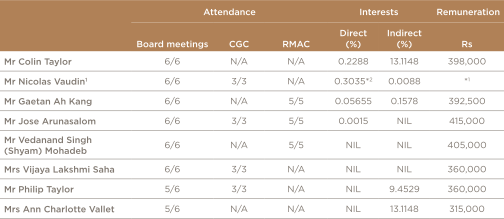
1. The remuneration of the executive director has been disclosed within Note 33 of the financial statements.
2. Mr Nicolas Vaudin has a joint interest in these shares held via a joint trading account.
1.2 The Board sub-committees
The Board of Lavastone is assisted in its functions by three main sub-committees: (i) Risk Management and Audit Committee (“RMAC”), (ii) Corporate Governance Committee (“CGC”) and (iii) Board Investment Committee (“BIC”). These three committees play a key role in supporting the Board and providing in-depth focus and specialist guidance on particular matters relating to Lavastone’s activities according to their terms of reference. Where appropriate, the committees make recommendations on items requiring the approval of the Board. For the year under review, the Board is satisfied that all committees have effectively honoured their responsibilities and fulfilled their role of providing oversight to the Board on specific matters, while assisting the Board in dealing with existing and emerging challenges.
The Chairman of each committee provides regular reports of the proceedings of the committees to the Board. Furthermore, the Board has access to the minutes of the committee meetings. Each committee has its own charter/term of reference, which is reviewed as and when necessary, and any proposed amendments are recommended to the Board for approval.
For the year under review, no changes were made to the terms of reference of the Corporate Governance Committee, to the Charter of the Risk Management and Audit Committee and to the terms of reference of the Board Investment Committee.
When necessary, other committees can be set up by the Board on an ad-hoc basis to consider specific matters.
1.2.1 Risk Management and Audit Committee (“RMAC”)
1.2.1.1 Composition
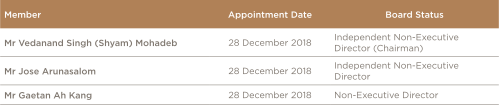
The directors who served on the RMAC for the financial year under review are:
1.2.2 Meeting Schedule
During the year under review, the RMAC met 5 times. The attendance of individual directors at these meetings is disclosed on page 62.
1.2.1.1 Terms of Reference
As per its charter, the RMAC oversees the risk and audit-related issues, and reviews and monitors the financial statements of the Company and its subsidiaries. It also monitors the implementation of internal audit recommendations, as well as the integrity of the Annual Report and financial statements. Furthermore, the RMAC makes recommendations to the Board with regard to the appointment or removal of the external auditor. It also reports to the Board on significant financial reporting issues and judgements relating to financial statements. The RMAC also helps in maintaining an effective internal control system and risk management systems.
The RMAC Charter is available on the Company’s website: https://www.lavastone.mu. The RMAC Charter was last reviewed at the Board meeting of 08 February 2019 and the Board will reassess any changes to be made to the RMAC Charter as and when the need arises.
1.2.1.2 Focus of the RMAC for the financial year 2025

1.2.3 Corporate Governance Committee (CGC)
1.2.2.1 Composition
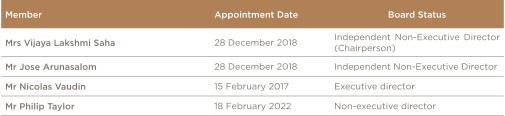
The directors who served on the CGC for the financial year under review are:
1.2.2.2 Meeting Schedule
During the year under review, the CGC met 3 times. The attendance of individual directors at these meetings is disclosed on page 62.
1.2.2.3 Terms of Reference
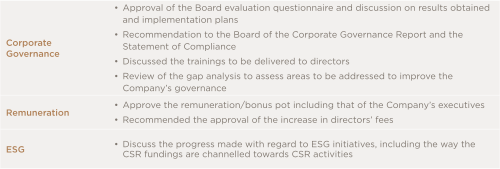
As per its terms of reference, the CGC makes recommendations to the Board on all corporate governance provisions and ensures that the disclosure requirements with regard to corporate governance are in accordance with the principles of the Code. The CGC’s responsibilities also encompass the functions of the Remuneration and the Nomination Committees.
The Terms of Reference of the CGC are available on the Company’s website: https://www.lavastone.mu. The Terms of Reference of the CGC was last reviewed at the Board meeting of 08 February 2019 and the Board will reassess any changes to be made to the said document as and when the need arises.
1.2.2.4 Focus of the CGC for the financial year 2025
1.2.4 Board Investment Committee (“BIC”)
1.2.3.1 Composition
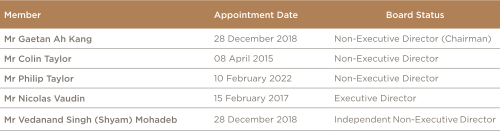
The BIC was Chaired during the year by Mr Gaetan Ah Kang.
The composition of the BIC was reviewed on 16 December 2024 such that the BIC is now Chaired by Mr Gaetan Ah Kang with Messrs Colin Taylor, Philip Taylor, Nicolas Vaudin and Shyam Mohadeb as members.
1.2.3.2 Meeting Schedule
During the year under review, no BIC meeting was held.
1.2.3.3 Terms of Reference
The BIC shall assist the Board of Lavastone in reviewing any investment decision, as well as any related transaction documents with regard to any project within the territory of the Republic of Mauritius and outside the scope of its territorial limit. It then recommends worthwhile investment projects to the Board.
The terms of reference of the BIC are available on the Company’s website: https://www.lavastone.mu The terms of reference of the BIC were last reviewed by the Board at the Board meeting on 12 May 2022, and the Board will reassess any changes to be made to the said document as and when the need arises.
1.3 Other Board matters
1.3.1 Appointment
Lavastone has implemented a formal and transparent process for the nomination and appointment of directors. When appointing directors, the Board considers its needs in terms of size, experience, skills and diversity. The total number of directors shall not at any time exceed twelve directors, to be in line with the number fixed in accordance with the constitution.
The CGC, in its capacity as the Nomination Committee of the Company, recommends to the Board the directors to be re-elected/appointed. Any director over the age of 70 is appointed at the Annual Meeting of Shareholders (“AMS”), in accordance with section 138(6) of the Companies Act 2001. Furthermore, all directors appointed by the Board will hold office until the next Annual Meeting of Shareholders where they will be eligible for re-election. The nomination and appointment process for directors is available for consultation on the Company’s website: https:// www.lavastone.mu
All directors will stand for re-election by way of separate resolutions at the Annual Meeting of Shareholders of the Company, scheduled in February 2026.
The names of the directors of the Company, their profiles and categories, are listed on pages 10 to 13.
The Board, with the support of the CGC, assumes responsibility for the implementation of a succession plan in order to ensure appointments to the Board as well as for senior management positions within the organisation, thus guaranteeing business continuity and creating value in the long term.
1.3.2 Induction and orientation
The Board, with the assistance of the Company Secretary, is responsible for the induction and orientation of new directors to the Board. Upon his or her appointment, each new director is provided with a comprehensive induction pack containing documents relating to directors’ legal duties. This induction pack allows newly appointed directors to have an in-depth understanding of the Company’s activities, challenges, governance framework, business model and strategy, as well as have an overview of compliance and regulatory matters.
No new director was appointed during the financial year under review.
Recognising that the directors need all the information and support to be more effective in their roles, site visits to newly acquired or developed properties are organised.
1.3.3 Professional development
The Board reviews the professional development needs of directors during the Board evaluation process, and directors are encouraged to develop their skills and expertise continuously. They also receive regular updates on the latest trends and legislations affecting business from management and/or other industry experts. Training is provided to directors based on the Company’s needs and/or training needs.
For the year under review, the directors participated in a training on ‘AML/CFT’ delivered by Smart-Tree Consulting in October 2025.
1.3.4 Board access to information and advice
All directors can meet with the Company Secretary to discuss issues or obtain information on specific areas or items to be considered at Board meetings or any other areas they consider appropriate.
Furthermore, directors have access to the Company’s records and hold the right to request independent professional advice at the Company’s expense.
1.3.5 Directors’ duties, remuneration and performance
The directors are aware of their legal duties and may seek independent professional or legal advice, at the Company’s expense, relating to any aspect of their duties and responsibilities. The Code of Ethics and the Board Charter of Lavastone provide guidance to the directors in fulfilling their roles.
All directors have a duty to act in the best interests of the Company and are expected to ensure that their other responsibilities do not encroach on their responsibilities as directors of Lavastone.
1.3.6 Interests of directors and conflicts of interest
All directors, including the Chairman, declare their direct and indirect interests in the shares of the Company, as well as their interests in any transaction undertaken by the Company in accordance with the rules applied for Development & Enterprise Market companies, whenever the directors deal in the shares of the Company with the Company Secretary keeping the Directors informed of the closed periods. The interests register of the Company is maintained by the Company Secretary and is available for consultation by shareholders, upon written request to the Company Secretary.
Any conflicts-of-interest and related-party transactions are in accordance with the Conflict of interest, Related Party Transactions policy and Code of Ethics. For the year under review, all conflicts of interest were effectively managed.
The Code of Ethics of the Company sets out instances which could lead to a conflict of interest and the procedure for dealing with such potential conflicts.
The Board is also responsible for instituting and applying appropriate policies on related party transactions.
For the year under review, only one Director dealt in the shares of the Company and acquired 1,074,200 ordinary shares. All relevant disclosures and notifications were made in line with the Company’s Share/Listed Debt Trade Policy.
1.3.7 Information, information technology and information security policy
The Company has reinforced the safety and security measures in place to protect the data it collects, stores, and processes, to comply with the Data Protection Act 2017. A Data Controller has been appointed to oversee data processing purposes and ensure compliance at Lavastone. Additionally, a Data Protection Officer was appointed, responsible for data protection strategy, regulatory compliance, and liaising with the Data Protection Office (DPO). Lavastone and its subsidiaries are registered with the DPO.
The Board oversees information governance within the organisation and ensures that the performance of information and Information Technology (IT) systems leads to business benefits and creates value.
The Board approves material investments in information technology and security, as set out in the annual budget, according to the Company’s business needs.
In December 2021, the Board approved the ‘Data Protection / Information Security Policy’ to address the IT and cyber security requirements of the business. For confidentiality and security reasons, the ‘Data Protection/ Information Security Policy’ has not been published on the website of the Company.
1.3.8 Board performance review
Lavastone believes that a regular review of its directors would help in bringing healthier Board dynamics and continuous improvements in its decisions making process. Thus, in an endeavour to continue to have broader adoption of good governance practices, Lavastone carried out an evaluation of its directors during this past financial year end 30 September 2025.
As part of its yearly exercise, Lavastone has carried out a review of the performance of the Board and its committees for the year under review. A questionnaire was circulated to all its directors to obtain their views on the effectiveness of the Board, to assess their contribution to the Board’s performance, and to identify areas of improvement.
The Board evaluation process was undertaken in three stages:

The Board evaluation review concluded that no material concern had been identified and that all Board members were fully committed to furthering the Company’s objectives.
1.3.9 Directors’ remuneration
The Executive director is not remunerated for serving on the Board of the Company or its committees. His remuneration package as an employee of the Company, including performance bonuses, is in accordance with market rates.
The remuneration of non-executive directors consists of a mix of attendance and retainer fees and is aligned with market norms. Non-executive directors have not received remuneration in the form of share options or bonuses associated with organisational performance.
The remuneration of the executive director is reviewed and recommended for approval to the Board on an annual basis by the Corporate Governance Committee. The non-executive directors are not paid any performance bonuses and there are no long-term incentive plans in force at the Company.
For the financial year under review, the directors’ fees were reviewed by the Corporate Governance Committee, taking into account market benchmarks. The Committee’s recommendations were subsequently submitted to the Board for approval.
The remuneration paid to executive and non-executive directors and/or committee members is set out in the table on page 62.
1.4 Shareholders and other key stakeholders
1.4.1 Holding structure
Lavastone Ltd is a public company limited by shares. Its shareholding structure as at 30 September 2025 is as follows:
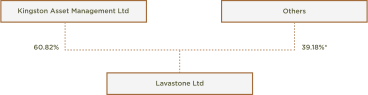
*The National Pensions Fund has a direct interest of 5.50% in the share capital of the Company
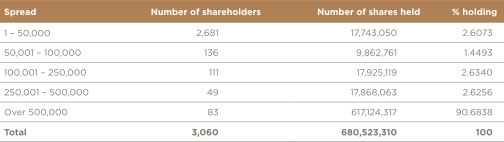
1.4.2 Distribution of shareholders as at 30 September 2025
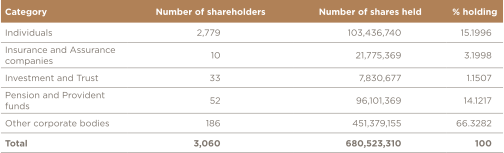
To the best of the directors’ knowledge, the share ownership analysis per holding percentage and categories of shareholders as at 30 September 2025 is as follows:
1.4.3 Spread of shareholders as at 30 September 2025
1.4.4 Contract between the Company and its substantial shareholders
There is no shareholders’ agreement affecting the governance of the Company by the Board for the year under review.
1.4.5 Communication with shareholders and stakeholders
Communication with shareholders and stakeholders has been mainly through the Annual Report, the published
unaudited results, the AMS, dividends declarations, press communiqués and the website. The Lavastone website
comprises an “Investor Centre” section which includes information on audited financial statements, interim and
final dividends, corporate announcements amongst others, as well as the digital version of the Company’s annual
report. Moreover, shareholders and stakeholders requesting information can post their queries in the “Investor
Inquiry” section of the website.
The external stakeholders of the Company, namely its customers, suppliers, shareholders, the Government/
regulators and the public, are reached via social media platforms like Facebook and LinkedIn, as well as through
advertisements. As and when required, focus groups are held with clients to assess their expectations from
the Company. Regular channels of communication are also maintained with the Government/regulators.
In addition, shareholders are invited annually to the AMS to approve the financial statements and vote on the
(re)appointment of directors and the external auditor. The AMS for the year 2024 was held in February 2025.
The Company’s next AMS is scheduled in February 2026 and shareholders will receive the notice of the AMS
at least 21 days prior to the meeting, in accordance with the law.
The annual report, which also includes the notice of the annual meeting, is published in full on the Company’s
website: https://www.lavastone.mu.
1.5 Internal Control, Internal Audit and Risk Management
The Company’s internal control and risk management framework, and the key risks and steps taken to manage them, are detailed on 76 to 85.
The internal audit function is outsourced to Smart-Tree Consulting Ltd, which provides independent and objective assurance on the adequacy and effectiveness of the system of internal controls, which have been put in place to manage the significant risks of the business down to an acceptable level.

In line with good governance principles, internal auditors report to the Risk Management & Audit Committee on a quarterly basis. The RMAC approves the Risk-Based Internal Audit plan and evaluates the effectiveness of the Internal Audit function. Moreover, key audit findings are reported to the Board and reports are shared with Board members and senior management. In discharging its duties, the Internal Audit function has unrestricted access to all documents, key personnel and management staff.
All audit activities are performed in accordance with the International Standards for the Professional Practice of Internal Auditing, as provided by the Institute of Internal Auditors (IIA).
During the year under review, areas covered by Smart-Tree Consulting Ltd were:
- Third party risk management
- Payment
- HR
- AML/CFT
The General Manager of Smart-Tree Consulting Ltd is Ms Aurelie Sevene, who is ACCA qualified and a Certified Internal Auditor (CIA) by the Institute of Internal Auditors. The qualifications of Ms Aurelie Sevene and other key members of Smart-Tree Consulting Ltd are listed on its website: https://smartreeconsulting.com.
1.6 External Audit
The external auditor of the Company is BDO & Co (BDO), first appointed as external auditor at the AMS held on 10 July 2020 in replacement of Ernst and Young following a tender issued by the RMAC in January 2020. BDO was re-appointed as the external auditor by the shareholders of Lavastone Ltd at the annual meeting held in February 2025.
The RMAC discusses critical policies, judgements and estimates, and external audit issues with BDO as and when necessary and meets them at least once a year without management being present.
The RMAC assesses the effectiveness of the external audit process via feedback received from the management team. Areas of improvement are thereafter discussed with external auditors.
For the year under review, the fees paid to external auditors for non-audit work are set out on page 73. To guarantee objectivity and independence, the Board ensures the team providing non-audit services is different from the one providing audit services.
1.7 Risk Management
Several factors may affect Lavastone’s operations, financial performance and growth prospects. Although property is often considered a low-risk asset over the long-term, significant short- and medium-term risk factors are inherent in such asset classes. The Company’s performance may be materially and adversely affected by changes in the market and/or economic conditions, and by changes in laws and regulations (including any tax laws and regulations) relating to, or affecting, the Company or the interpretation of such laws and regulations.
One of the commitments of the Board of Lavastone is to establish a robust framework of risk oversight and management, to identify, assess, monitor and manage potential setbacks related to the Company’s activities.
Risk management forms an integral part of the Company’s culture as it is fully embedded into the day-to-day management and operation of the business.
The Company’s internal control and risk management framework, and the key risks and steps taken to manage them, are detailed on pages 76 to 85.
1.8 Reporting With Integrity
This report has been prepared in line with the principles set out by the International Framework established by the International Integrated Reporting Council (IIRC). It provides key information which enables the assessment of the strategy, business model, operating context, material risks and opportunities, governance and operational performance of Lavastone for the period 1 October 2024 to 30 September 2025.
1.9 Corporate Social Responsibility
Lavastone Properties’ CSR activities are channelled through the Taylor Smith Foundation, which works in collaboration with different NGOs operating in deprived areas of Mauritius and Rodrigues Island.
The Taylor Smith Foundation focuses on the following areas:
1. Education and Youth
2. Empowerment of Women
3. Sports
4. Protection of the environment
The donations made by the company and its subsidiaries during the accounting period amount to 1.4M as disclosed on Page 73.
1.10 Company Secretary
Cim Administrators Ltd, represented by Alex Lan Pak Kee, provides corporate secretarial services to Lavastone Ltd and its subsidiaries. The profile of Mr Alex Lan Pak Kee is set out on page 14.
The Company Secretary is responsible for ensuring that Board processes and procedures are followed and that all Board decisions are implemented. All directors have access to the advice and services of the Company Secretary who ensures compliance with all applicable rules and regulations for the conduct of the affairs of the Board.
1.11 Number of Employees and Key Senior Officers & Executives
The Group currently has a lean organisational structure, with all 49 full-time employees regrouped under Lavastone Services Ltd. Lavastone Services Ltd is the company overlooking business development and the day-to-day management of the Group’s activities, together with project appraisals.
The profiles of the key senior officers and executives are listed on page 14.
1.12 Other Matters
1.12.1 Related party transactions
Please refer to pages 150 to 151 of the annual report.
1.12.2 Management agreements
The Company has management contracts with Cim Administrators Ltd for the provision of company secretarial services, and with Raw IT Services Ltd for the management of the Group’s IT infrastructure.
1.12.3 Dividend policy
An interim dividend is usually declared in May and paid in June, and a final dividend is declared in December and paid in January. The payment of dividends is subject to the net profits of the Company, its cash flow and its needs, with regard to the group’s forthcoming capital expenditure.
1.12.4 Donations
The Company did not make any political donations during the year under review.

Alex Lan Pak Kee
For Cim Administrators Ltd
Company Secretary
15 December 2025
Other statutory disclosures
(Pursuant to Section 221 of the Mauritius Companies Act 2001)
Activity of the Company
The activities of Lavastone are disclosed on page 19.
Group structure with activities of subsidiaries
The Group structure of Lavastone has been disclosed on pages 16 to 17.
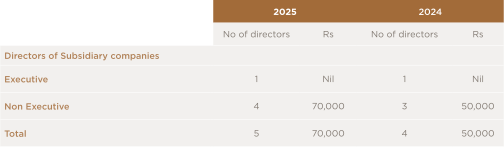
Directors’ remuneration
The remuneration of directors who have held office as at 30 September 2025 has been disclosed on page 62. Moreover, the executive and non-executive directors had received remuneration for holding position as directors in subsidiary companies as per the details set out in the table below:
Directors’ interest in shares
The interests of the directors in the shares of Lavastone as at 30 September 2025 are listed on page 62.
Particulars of entry in the interest register
An Interest Register, which is updated on an annual basis, is maintained by the Company Secretary. Any disclosure of interest as required under the Mauritius Companies Act 2001 is recorded in the Interest Register, which is available for inspection during normal office hours upon written request made to the Company Secretary.
Directors of Subsidiary companies
The list of directorship of Subsidiary companies as at 30 September 2025 are listed on page 155.
Audit fees as at 30 September 2025
For the year under review, the fees incurred for audit services by the Company and each of its subsidiary were as follows:
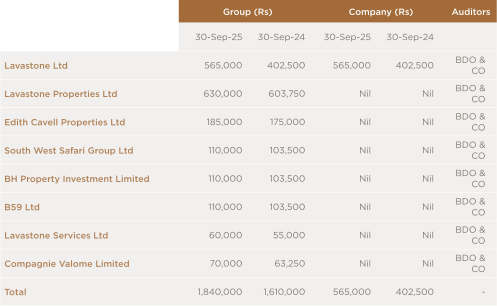
The external auditors have not carried out non-audit activities for the Company and its subsidiaries during the year under review.
Donations
During the year under review, no political donations were made by Lavastone Ltd and its subsidiaries. Moreover, as at 30 September 2025, Lavastone and some of its subsidiaries contributed the following amount to CSR activities:

Directors’ service contracts
None of the directors of the Company and its subsidiaries have service contracts that need to be disclosed under Section 221 of the Companies Act 2001.
Major Transactions
During the year under review, neither the Company nor its subsidiaries had carried out any major transaction under Section 130 (2) of the Companies Act 2001.
SECRETARY’S CERTIFICATE
In my capacity as Company Secretary of Lavastone Ltd (the ‘Company’), I hereby confirm that, to the best of my knowledge and belief, the Company has filed with the Registrar of Companies, for the financial year ended 30 September 2025, all such returns as are required of the Company under the Companies Act 2001.

Alex Lan Pak Kee
For Cim Administrators Ltd
Company Secretary
15 December 2025
STATEMENT OF DIRECTORS’ RESPONSIBILITIES
Statement of directors’ responsibilities in respect of the preparation of financial statements and internal control
The Directors are responsible for the preparation of financial statements, which give a true and fair view of the financial position, financial performance and cash flows of the Company. In so doing, they are required to:
- select suitable accounting policies and apply them consistently;
- make judgements and estimates that are reasonable and prudent;
- comply with the provisions of the Companies Act 2001 and the International Financial Reporting Standards (IFRS), Accounting Standards, and explain any material departure thereto;
- prepare the financial statements on a going concern basis, unless it is inappropriate to presume that the Company will continue its business in the foreseeable future.
The Directors are also responsible for the proper maintenance of accounting records, which disclose, at any time and with reasonable accuracy, the financial position and performance of the Company. They are also responsible for maintaining an effective system of internal control and risk management, for safeguarding the assets of the Company and for taking all reasonable steps to prevent and detect fraud and other irregularities.
The Directors acknowledge they have exercised their responsibilities as described above and confirm they have complied with the above requirements in preparing the financial statements for the year ended 30 September 2025. They also acknowledge the responsibility of external auditors to report on these financial statements and to express an opinion as to whether they are fairly presented.
The Directors confirm they have established an internal audit function and report that proper accounting records have been maintained during the year ended 30 September 2025. They also declare nothing has come to their attention which could indicate any material breakdown in the functioning of internal control systems and have a material impact on the trading and financial position of the Company.
On behalf of the Board

Colin Taylor
Non-Executive Director and Chairman
15 December 2025

Nicolas Vaudin
Executive Director and Managing Director
RISK MANAGEMENT REPORT
RISK MANAGEMENT AND INTERNAL CONTROLS
Risk Environment and Sector Outlook
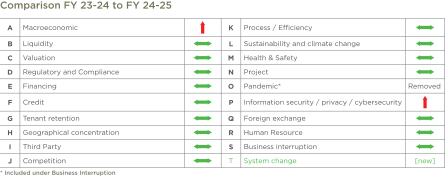
The real estate sector globally continues to evolve within a complex environment marked by inflationary pressures, rising interest rates, shifts in demand patterns, and increasing exposure to environmental and climate-related risks. Pandemic risk is no longer considered an active and standalone risk. Instead, based on lessons learnt and resilience measures, this risk has been re-classified under Business Interruption according to today’s reality and taken into account in the Business Continuity Plan.
In Mauritius, the property market has experienced sustained growth, supported by foreign investment and development in the luxury and residential segments and retail mall extension. The commercial property segment has also seen continued growth with a number of new office buildings starting construction. However, risks of market overheating, rising construction costs, supply chain delays, and environmental exposure remain material considerations.
The Board recognises that Lavastone operates within a dynamic and evolving real estate environment. These global and local developments guide our strategic planning and are embedded in the ISO 31000-aligned Risk Management Framework to ensure that risks are identified, assessed, and managed in a structured and proactive manner.
The main risks identified during the financial year, along with mitigation measures, are summarised in our Business Risk Register on pages 83 to 85.
The Risk Management Framework
In line with Principle 6 of the National Code of Corporate Governance for Mauritius, the Board is responsible for setting the Company’s risk appetite and ensuring that a sound risk management and internal control framework is in place.
Lavastone has implemented a structured Risk Management Framework based on the ISO 31000 Risk Management guidelines which provide a structured and internationally recognised approach to managing risk. The framework ensures that risk management is integrated, structured, and dynamic, and embedded in the Company’s culture and decision-making processes.
The key components of the framework are:
1. Integration – Risk management is incorporated into our strategic planning, investment decisions, and day-to-day operations.
2. Structured and Comprehensive Approach – We follow a systematic process for identifying, assessing, and treating risks across all business units.
3. Customization – The framework is tailored to the nature of the real estate sector in Mauritius, considering the Company’s size, context, and business model.
4. Inclusion of Stakeholders – Input is sought from management, employees, investors, and other stakeholders to ensure a complete understanding of risks.
5. Dynamic and Responsive – The framework evolves to address changes in the economic, legal, and regulatory environment.
6. Continual Improvement – The risk management process is regularly reviewed and improved to enhance effectiveness.
The Risk Management Process
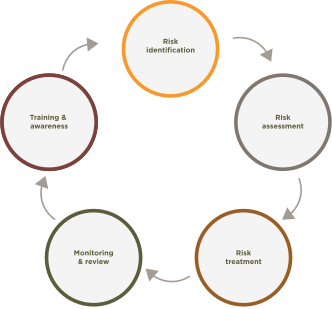
Lavastone applies the following steps of the ISO 31000 process:
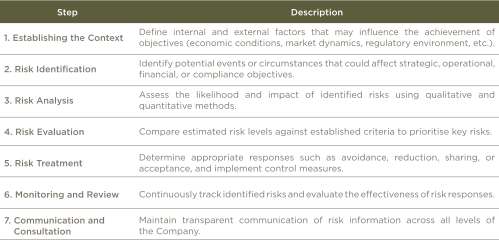
Emerging risks:
The Board actively monitors emerging risks that may affect the Company’s long-term sustainability. Key areas include:
- Digitalisation and technology transformation – which offer operational efficiencies but require robust cybersecurity and staff upskilling.
- System change risk – Upgrading or replacing core IT, property management, or operational systems carries risks of disruption to business processes, data migration errors, and potential operational downtime.
- ESG expectations – Growing stakeholder demand for sustainable, socially responsible, and well-governed operations requires integration of ESG principles into project design, construction, and reporting.
- Climate-related financial risks – Especially relevant for coastal developments, these include exposure to extreme weather, sea-level rise, and regulatory requirements.
The Board ensures that these emerging risks are integrated into the risk management framework, continuously monitored, and addressed through proactive mitigation strategies, safeguarding the Company’s resilience and long-term value creation.
During this financial year, Lavastone identified and seized the following opportunities:
- Launched the Montebello project, with construction scheduled to begin in the first quarter of FY26.
- Anchor tenant signed for the commercial project in La Gaulette. Scheduled to begin construction in Q1 FY26.
- Focused on employee development through the implementation of a Performance Management System (PMS)
and registration for the Great Place to Work certification. - Explored acquisitive opportunities to diversify the portfolio.
- Sold non productive land assets in Trianon.
- Invest in several yielding property development projects.
- Launched the planned expansion of C Rodrigues at Mourouk.
Risk Governance
To strengthen its risk governance framework, Lavastone has adopted the internationally recognised Three Lines of Defence (3LoD) model, which clearly defines responsibilities for managing risks and maintaining effective internal controls.
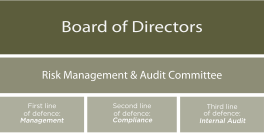
The Board of Directors recognises that an effective risk management system is vital for achieving the Company’s strategic and operational objectives and for ensuring long-term sustainability.
The Risk Management & Audit Committee (“RMAC”) assists the Board in overseeing the adequacy and effectiveness of the Company’s risk management systems and internal controls. The committee is guided by a formal and approved charter and performs its role by providing independent insight to the Board.
The RMAC comprises 3 non-executive directors and is chaired by an independent non-executive director.
The key role and responsibilities of the RMAC are to provide its independent and objective advice on the key components of the controls’ framework:
- Financial statements
- Internal Audit
- External Audit
- Reporting and disclosure
- Risk Management
Management is responsible for identifying, assessing, and managing risks within the parameters set by the Board and is accountable to the Board and the RMAC.
The Risk and Compliance functions provide oversight and monitor adherence to risk policies and regulatory requirements. The Head of Finance is identified as our risk champion whose role is to raise awareness on the risk environment across the organisation and coordinate the risk meetings. A Compliance Officer is appointed to focus mainly on the regulatory, compliance and legal risks, including AML/CFT.
Our Internal Audit function provides assurance to the RMAC and Management on the status of the Risk and Control environment. Refer to the below section on Internal Audit.
To remain effective in its risk management process, Lavastone has implemented the following components:

Risk management policy
Our RM policy is approved by the Board of Directors and RMAC. The policy is aligned with our vision and strategic objectives.
Our vision: Lavastone aims to be the preferred partner for commercial real estate solutions, while delivering optimum value to its shareholders.
Our strategic objectives

Risk appetite statement
The risk appetite is the amount and type of risk that an organisation is willing to take in order to meet their strategic objectives. Our Risk Appetite is approved by the Board of Directors and monitored by Management and the RMAC.
We will pursue growth whilst continuously improving customer service and operational excellence. To improve our commitment to sustainability, we will strive to meet the criteria for a LEED certification on our new development projects.
We aim to grow regionally and have 10% of our portfolio outside of Mauritius in 10 years’ time.
However, we will not engage in and tolerate activities which create safety, regulatory and quality concerns.
We will not make decisions which pose a financial risk impact of 10% or more on our revenue or increase our loan to value ratio to above 40%. Our exposure is limited to:
- 25% of Net Asset Value for any one sector (Retail, Hospitality, Office, Industrial, Residential etc)
- 20% of Investment Property Value for any single building
- 20% of Rental Revenues for a single tenant
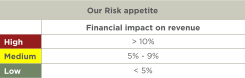
During this financial year, we maintained our loan to value ratio to 24.9% thus aligning with our risk appetite. In order to manage dependency risks, we also maintained concentration value of any single property and revenue from a single tenant below 20%. The value of our net assets is dispersed across different segments namely hospitality, retail, office, and industrial. Office properties represent the highest value of our net assets, with 33%. The higher proportion in the office segment is explained by the acquisition of Absa House following the sale of the Riche Terre Industrial Park. The development of Montebello together with the development of Case Noyale and acquisition and development of Industrial Land will address this imbalance once these investments are completed.
Overall, Lavastone is committed to its risk appetite statement and is continuously taking the appropriate measures to maintain its risk appetite to an acceptable level.
Risk criteria
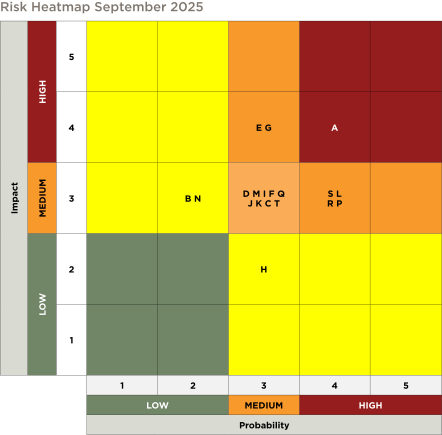
Our risk criteria take into consideration the 2 elements of probability and impact and is defined on a scale of 1 to 5.
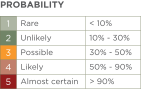

Our impact criteria include aspects such as financial, legal & regulatory, health and safety, reputation and business continuity.
Business Risk Register
As part of the Monitoring and Review process, the Business Risk Register (“BRR”) of Lavastone consists of risk identification, assessment and response. The BRR is a recording and monitoring tool designed to assist the Management team of Lavastone for informed decision-making.
Our BRR is reviewed and updated on a quarterly basis through risk management meetings and reported to the RMAC.
These risk sessions consist of the Management Team, the Risk Champion and the Internal Auditor and the purpose of such meetings is to identify changes in existing risks and emerging new risks.
Refer to the section on risk heatmap and top 10 risks below.
Risk Indicators
Measuring performance is a key monitoring activity to assess how effective risk management is at supporting our strategic objectives. The approach to measuring performance must be a data-driven exercise. To remain agile, risk data should be shared throughout the organisation. At Lavastone, we have defined risk indicators which enable our team to objectively evaluate the risk environment on a regular basis.
SYSTEM OF INTERNAL CONTROLS
The Board of Directors is responsible for ensuring that Lavastone maintains a comprehensive system of internal
controls designed to safeguard shareholders’ investments and the Company’s assets, and to ensure the integrity
of financial and non-financial information.
The internal control system forms an integral part of the Company’s risk management framework, providing
assurance that risks are identified, assessed, and managed within defined tolerances. It encompasses both
preventive and detective controls and covers all major operational, financial, and compliance activities.
Key components of Internal Controls
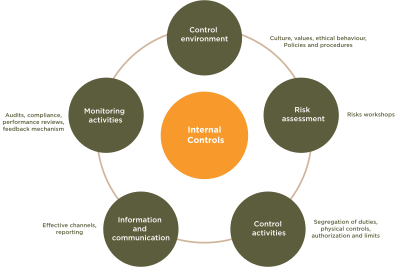
Monitoring and Assurance
The Board, through the RMAC, ensures ongoing monitoring and evaluation of the effectiveness of internal
controls. This is achieved through:
- Regular reporting by management on control implementation and key risk indicators.
- Independent reviews by Internal Audit, which evaluates the adequacy and effectiveness of controls across
all business units. - Follow-up and tracking of corrective actions for identified control deficiencies.
The RMAC also reviews the findings of the external auditors, considers their recommendations, and monitors
management’s response and remediation actions.
Continuous Improvement
Recognising that internal control is a dynamic process, Lavastone continually strengthens its control environment by:
- Updating procedures in response to changes in the business model, regulatory requirements, or risk profile.
- Incorporating lessons learned from audits and incidents.
- Leveraging technology to automate and enhance control processes, including through system upgrades and integration.
- Conducting staff training to build awareness and competence.
Based on the work performed by management, internal and external auditors, and the RMAC, the Board is satisfied that the Company’s system of internal controls is adequate and effective, operating as intended, and provides reasonable assurance that material risks are appropriately managed and controlled.
INTERNAL AUDIT
The Internal Audit function of the Group is outsourced to Smart-Tree Consulting Ltd (also referred to as ‘SCL’ or ‘the Internal Auditor’), since 2018. The Internal Audit team consists of professionals who are either Certified Internal Auditors (CIA), ACCA qualified or degree / diploma holders. As part of their continuous professional development and education, the internal auditors attend regular training sessions on key topics including Ethics.
The mission of the Internal Auditor is to provide independent, objective assurance and consulting services, designed to add value and improve our operations. The Internal Auditor is not responsible for the implementation of controls or the management and mitigation of risk, responsibilities which remain at the Board and management levels.
The internal audit function is governed by the mandatory elements of the Institute of Internal Auditors’ (IIA) International Professional Practices Framework, including the Core Principles, the Code of Ethics and the International Standards for the Professional Practice of Internal Auditing.
A formal internal audit charter is approved by the RMAC and describes Internal Audit’s role, responsibilities, scope, authority and reporting structure, amongst others.
An internal audit plan is approved by the RMAC on an annual basis and uses a risk-based approach.
During the FY 2024-2025, the Internal Auditor covered the following scope:

The objectives of the internal audit assignments were to:
- Provide assurance to the Board, RMAC and Management that risks are mitigated through control measures and adequate procedures.
- Evaluate the controls design.
- Provide risk insights and recommendations on the improvement of the control environment.
- Evaluate adherence to the internal policies and procedures and regulatory framework.
As part of its key responsibilities, the RMAC:
- Reviews and approves the internal audit charter.
- Reviews and approves the annual internal audit plan.
- Reviews and monitors management’s responses and actions to internal audit findings.
- Reviews and monitors the effectiveness of the internal audit function.
The Internal Auditor monitors and assesses their audit recommendations with Management on a monthly basis, until they are fully implemented. The Internal Auditor reports to the RMAC on a quarterly basis and the status of audit recommendations and Management action plans are reported to the RMAC. The Internal Auditor has unrestricted access to and communicates and interacts directly with, the RMAC.